
hi, i’m jaden!
i’m a colourful, neurodivergent, introspective, faith-informed, systems-questioning social work mind (and human). i think deeply, feel intensely, and have spent much of my life trying to understand why my body and inner world responded so strongly to a world that often felt too fast, too loud, and too demanding.
for a long time, i believed something was fundamentally wrong with me.
i carried symptoms that didn’t fit neatly into diagnostic boxes. i sought answers in a medical system that often reduced my experience solely to anxiety, stress, or “nothing concerning.” i learned what it feels like to be gaslit—not just emotionally, but physiologically—when your lived reality doesn’t align with dominant frameworks of health.
and yet, my body was never lying.
what i now understand is that my symptoms were not signs of weakness or failure. they were intelligent adaptations—shaped by stress, trauma, sensitivity, and prolonged survival in environments that didn’t know how to hold depth or complexity.
this realization changed everything.
the long road to “making sense” …
my path into mind–body study and healing was not linear or trendy. it was born out of necessity.
as a teenager and young adult, i lived with chronic, confusing symptoms—some medically explained, many not—alongside deep emotional intensity and nervous system overwhelm. i learned early how easily pain can be minimized when it doesn’t present “cleanly,” and how often people are expected to override their bodies in order to keep functioning.
at the same time, i was drawn to understanding people, systems, and suffering. i moved toward social work not because i wanted to fix anyone, but because i could see—intuitively and experientially—how personal distress is inseparable from relational, social, and structural forces.
over the years, i worked within social services and adjacent systems, witnessing firsthand how trauma is shaped not only by individual events, but by chronic stress, power imbalances, and environments that ask people to endure far more than what any of us are meant to.
what troubled me most was how often people were treated as problems to be managed, rather than nervous systems trying to survive.
the development of the phoenix lens
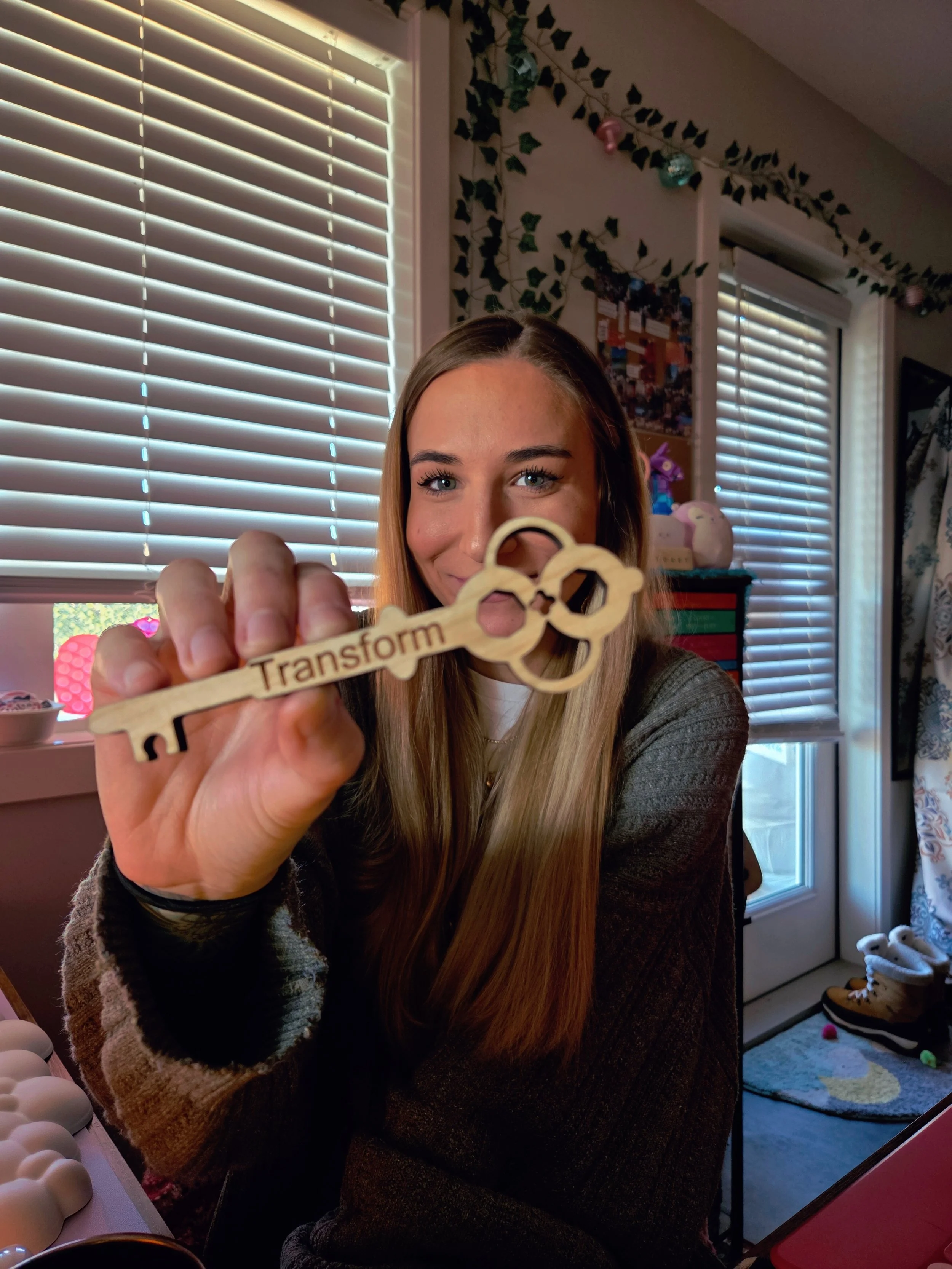
the phoenix lens © emerged because i couldn’t find a framework that held all of this together.
i saw mind–body science stripped of meaning, and systems that treated people as problems rather than nervous systems—leaning on bandaid solutions while neglecting research that supports mind–body healing.
the phoenix lens © is my attempt to hold complexity with care.
it is an integrative, mind–body framework for understanding healing and transforming the dominant, biomedical model—one that brings together nervous system science, embodiment, social context, and meaning, without reducing people to diagnoses or bypassing lived experience.
it asks different questions.
instead of what’s wrong with you?
the phoenix lens © asks:
what happened to you—and what did your body have to do to get through it?
what is this symptom trying to communicate or protect?
what patterns make sense when we include context, history, and relationship?
what does your nervous system believe is unsafe right now?
what would safety, support, and integration actually look like for you?
what do you need—not to “fix” yourself, but to come back to yourself?
this framework is for individuals seeking understanding, and for practitioners who sense the limits of reductionist models and long for more humane, ethical ways of working with distress.
when the body became the teacher
eventually, when i finally stopped to listen, the answers i was seeking stopped coming from experts and began emerging from my own body.
through years of self-study, lived experience, and careful reflection, i came to understand trauma not only as a singular event, but as something cumulative, relational, and deeply embodied. i learned how the nervous system adapts to threat, how symptoms can persist long after danger has passed, and how healing requires far more than insight or willpower.
it requires safety.
it requires meaning.
it requires being met—not managed, dismissed, or treated as a problem to be fixed.
this understanding brought both grief and relief. grief for the years i spent believing i was broken. relief in realizing that my body had been doing its best all along.
faith, harmed and reclaimed
my relationship with faith has been complex.
like many, i was harmed by Christianity—by teachings that dismissed the body, minimized suffering, or spiritualized pain in ways that silenced honest experience. for a long time, faith felt unsafe, disconnected from reality, or incompatible with what my body knew to be true.
and yet, something remained.
over time (years!)—slowly, cautiously, and with discernment—i found myself returning to the teachings of Jesus through a very different lens. not as performance. not as certainty. but as an embodied invitation toward restoration, compassion, and truth.
what surprised me most was how deeply aligned many biblical concepts were with what neuroscience now confirms: the importance of safety, renewal of the mind, gentleness, rest, and love that casts out fear.
faith, for me, became less about belief and more about healing—not a cure, not a mandate, not a measure of worth, but one way of making meaning of suffering and restoration in the body.
that faith informs my work now—humbly, openly, and without coercion.

how i approach this work
i don’t believe healing should be rushed, forced, or extracted from people.
i believe:
symptoms are meaningful
the body is intelligent
safety precedes change
people deserve frameworks that honour their full humanity
my voice is intentionally soft, accessible, and human—not because the work is simple, but because complexity deserves clarity and care.
i don’t position myself as an authority over anyone. i also believe that you are the expert of your own life. i simply walk alongside, translate, reflect, and offer a framework that people can engage with at their own pace.
an invitation
if you’ve felt misunderstood by your body, by systems, or by faith—you’re not alone.
if you’re a practitioner quietly questioning the models you were taught—you’re not wrong for wondering.
if you’re tired of being told to push through, fix yourself, or believe harder—you’re welcome here.
this space exists for slowing down, making sense, and reconnecting with what has always been true beneath survival.
you don’t need to arrive with answers.
you don’t need to believe anything specific.
you don’t need to be “ready.”
you’re allowed to be human here.